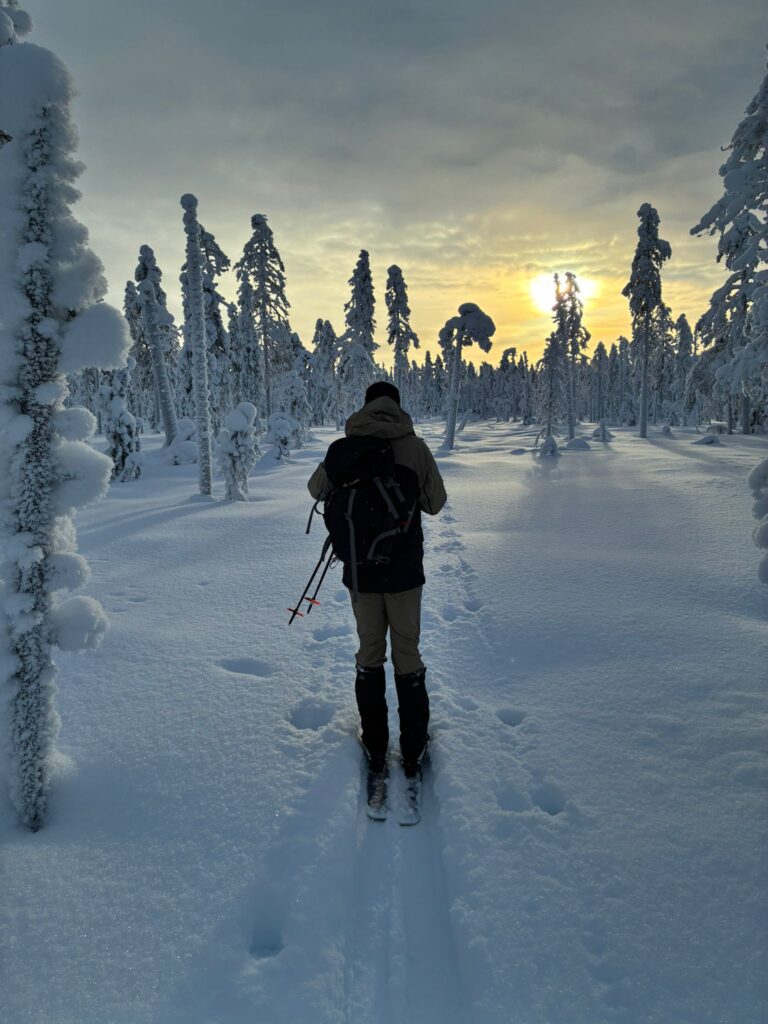
In Finland, winter is defined as the period when the daily mean temperature stays continuously below 0 °C. According to the Finnish Meteorological Institute, that threshold is usually crossed in mid-October in Finnish Lapland and during November in the rest of Finland. At Nivunki Village, our winter season opens on 14 November 2026 and runs through to 3 April 2027. The sections below answer the questions most travellers ask when planning a winter trip north.
How is winter officially defined in Finland?
In Finland, winter is defined by the Finnish Meteorological Institute (FMI) as the period when the daily mean temperature remains continuously below 0 °C. This is known as thermal winter. It is a statistical definition based on temperature averages, not the calendar date of the December solstice.
Warm spells can briefly push daily highs above 0 °C even during thermal winter, but as long as the mean temperature stays below freezing, winter is considered to be in progress. This distinction matters for travellers: it means the Finnish winter season is longer and more variable than the astronomical season, and it starts considerably earlier in the north than in the south.
When does winter start in Lapland compared with southern Finland?
Winter starts significantly earlier in Finnish Lapland than in the south. According to the FMI, thermal winter usually begins in mid-October in Lapland, during November in the rest of Finland, and reaches the southwestern archipelago as late as December. The further north you travel, the earlier and longer the winter season in Finland becomes.
This gap of six to eight weeks between north and south is one of the reasons Finnish Lapland draws winter travellers from across Europe and beyond. By the time temperatures in Helsinki are still hovering around zero, the lakes and fells around Muonio have already been frozen for weeks. The winter season in Finland is, in effect, two different experiences depending on which part of the country you are in.
Is November a winter month in Lapland?
Yes, November is a winter month in Finnish Lapland by the FMI’s thermal definition. Because thermal winter usually begins in mid-October in Lapland, November is already well into the winter season, not a shoulder period. Permanent snow cover typically follows within two weeks of winter’s start, so most of November in Lapland has snowy ground and frozen water.
For travellers considering visiting Lapland in November, this is an important distinction. The month is not a grey, in-between period. It is early winter proper, with short days, building snow, and the aurora season well under way. Our season at Nivunki Village opens on 14 November, which reflects this reality. By mid-November, the landscape and the conditions are already those of a genuine Arctic winter.
How long does winter last in Lapland?
Winter lasts approximately 200 days in Finnish Lapland, according to the FMI. That is roughly six and a half months, stretching from mid-October through to early May. Thermal spring begins in early May in northernmost Lapland. By comparison, winter lasts around 100 days in southwestern Finland, making Lapland’s winter roughly twice as long.
For travellers, this duration means there is considerable variety within a single Lapland winter. Early winter in November brings the first deep snows and long aurora nights. Midwinter in December and January is the darkest period. February sees the light returning noticeably. March is typically when snow depth reaches its peak. And April, while spring is approaching, still delivers full winter conditions in the north. You can read more about what each winter month is like in Finnish Lapland in our month-by-month guide.
When does the snow arrive in Finnish Lapland?
Permanent snow cover in Finnish Lapland typically arrives about two weeks after thermal winter begins. Since winter usually starts in mid-October in Lapland, that places permanent snow around late October or early November in most years. Snow depth then builds steadily through the winter months, peaking around mid-March.
At that peak, snow depths in eastern and northern Finland average between 60 and 90 cm on open ground. In southwestern Finland, the average is considerably lower, at 20 to 30 cm. The deep snowpack of late winter in March is one reason snowshoe treks, snowmobile safaris, and ice fishing are so rewarding in the later part of the season. These are averages, and conditions vary from year to year. We never present them as guarantees for a specific date or visit.
Knowing what conditions to expect also shapes what you wear. Our stays at Nivunki Village include premium winter clothing, but if you want to understand the layering logic behind it, our guide on what to wear in Lapland in winter covers it in full.
What are the winter months in Finnish Lapland at a glance?
The table below maps the winter months in Finland as they apply to Finnish Lapland, alongside what that means for a stay at Nivunki Village. The aurora season runs from late August to early April, so the entire period from November through to our season close on 3 April falls within it.
| Month | In Lapland | At Nivunki Village |
|---|---|---|
| October | Thermal winter usually begins mid-month | Preparing for the season |
| November | Early winter; permanent snow usually follows within weeks of winter’s start | Season opens 14 November |
| December | Darkest month; kaamos above the Arctic Circle | Long aurora nights |
| January | Deep winter | Full winter programme |
| February | Light returning | Ice fishing trips begin |
| March | Snow depth usually at its peak around mid-month | Bright days, active auroras |
| April | Winter continues in the north | Season ends 3 April |
For a fuller picture of what each of these months feels like on the ground, see our month-by-month winter guide.
What does winter mean for a stay at Nivunki Village?
Nivunki Village is an adults-only glass kota village beside a lake, about 20 km from Muonio in Finnish Lapland. Our winter season runs from 14 November 2026 to 3 April 2027, which maps almost exactly onto the full depth of the Lapland winter and covers the entire aurora season from mid-November through to early April.
Every stay includes premium winter clothing, so the cold is something to move through rather than endure. The glass kotas are designed for winter: the panoramic views across the frozen lake are there whether you are lying in bed or sitting with a drink after the sauna. The site sits away from light pollution, which matters when the Northern Lights season is at its most active. We never promise a sighting, but we put you in the best possible position to see one.
The winter programme covers husky adventures, reindeer rides, snowmobile safaris, snowshoe treks, ice fishing from February onward, and guided aurora expeditions. Our guides grew up in this landscape. They know the trails, the lakes, and the conditions from a lifetime of living with them. If you want to understand what the glass kotas themselves are like, you can read more about our glass kotas before you arrive.
To start planning, plan your winter stay with our team and we will help you find the right dates for what you want from the season.
Frequently asked questions
When does winter start in Lapland?
Thermal winter in Finnish Lapland usually begins in mid-October, according to the Finnish Meteorological Institute. This is when the daily mean temperature drops and stays below 0 °C. Permanent snow cover typically follows within two weeks. At Nivunki Village, our winter season opens on 14 November, which falls in the early weeks of established winter.
How long is winter in Lapland?
Winter in Finnish Lapland lasts approximately 200 days, according to the FMI. That spans from mid-October through to early May, when thermal spring begins in northernmost Lapland. This makes the Lapland winter roughly twice as long as winter in southwestern Finland, where the season runs for around 100 days.
Is November a winter month in Finland?
In Finnish Lapland, yes. The FMI’s thermal winter definition places the start of winter in mid-October in Lapland, so November is already well into the winter season there. In the rest of Finland, November is typically when thermal winter begins. In the southwestern archipelago, winter may not arrive until December.
When is there the most snow in Lapland?
Snow depth in Finnish Lapland usually peaks around mid-March. At that point, the FMI records average depths of 60 to 90 cm on open ground in eastern and northern Finland. The snowpack builds steadily from late October onward and begins to diminish after mid-March, though deep snow typically remains through the end of our season on 3 April.