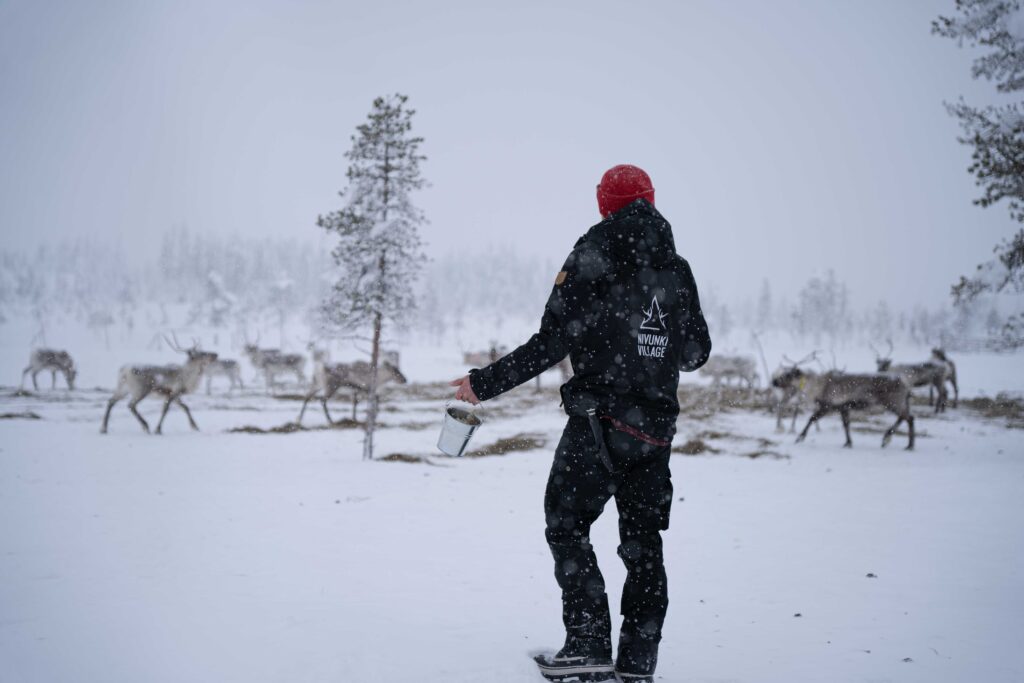
Knowing what to wear in Lapland in winter is the difference between spending your days comfortably outside and retreating indoors after twenty minutes. The answer is three layers: a moisture-wicking base layer, an insulating mid layer and a windproof outer layer, with serious attention to your hands, feet and head. At Nivunki Village, premium winter clothing is included in every stay, so you can arrive without a suitcase full of specialist gear.
This guide walks through the layering system, what changes month by month from November to March, how to dress for specific activities and what to put in your bag. Whether you are planning a night watching for the Northern Lights or a morning on a husky sled, the principles are the same.
What should you wear in Lapland in winter?
It comes down to one word: layers. Most of Finnish Lapland lies north of the Arctic Circle, and temperatures shift not just between months but between morning and afternoon, and between standing still and moving. A system of three layers lets you adapt as conditions change.
The base layer moves sweat away from your skin. The mid layer holds warmth. The outer layer handles wind and snow. Protect your hands, feet and head separately, because no amount of layering on your torso makes up for cold fingers or wet socks. Our guide to what each winter month is like in Lapland helps you judge how many layers you will need.
The three-layer system for Lapland winters
Each layer has a specific role, and the system only works when all three are in place. At Nivunki Village, we provide the outer layer, and you bring the two underneath.
Base layer
Choose a base layer made from wool or a synthetic material. Both move moisture away from the skin and keep you warm even when damp. Merino wool is a strong choice: it stays comfortable across a wide range of temperatures and resists odour, which matters on multi-day trips.
Avoid cotton next to the skin. Cotton absorbs moisture and holds it there, which draws heat away from your body in cold air. This applies to socks as much as to tops and leggings. Wool or synthetic throughout.
Mid layer
The mid layer traps warm air close to your body. Fleece and wool are the most practical options. A mid-weight fleece works well for most winter activities, and for the coldest days or for activities where you are standing still, a second or heavier mid layer makes a real difference.
Think about how you will be moving. On a snowshoe hike, you generate heat and may want to open or remove the mid layer. On a reindeer ride at a slow pace, you will want every bit of insulation you have.
Outer layer
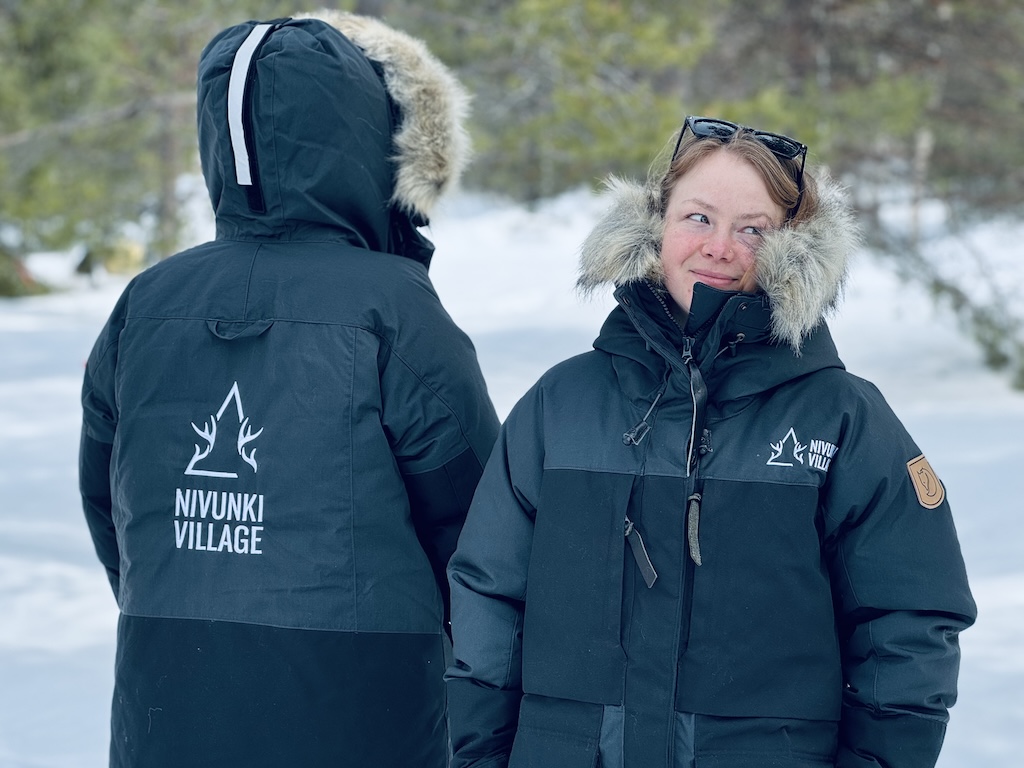
The outer layer is your shield against wind and snow. A windproof, insulated jacket and trousers keep cold air from cutting through your inner layers and stop snow from working its way in at the cuffs and collar. A high collar and adjustable cuffs matter when the wind picks up across open terrain.
This is the layer you do not need to pack for Nivunki Village. Our clothing package includes a warm winter jacket and trousers, Sorel boots, hats and gloves.
Protect your extremities: hands, feet and head
Your core can be perfectly layered and you can still feel miserable if your hands and feet are cold. They are usually the first to feel it, and once they are cold, it takes time to warm them back up.
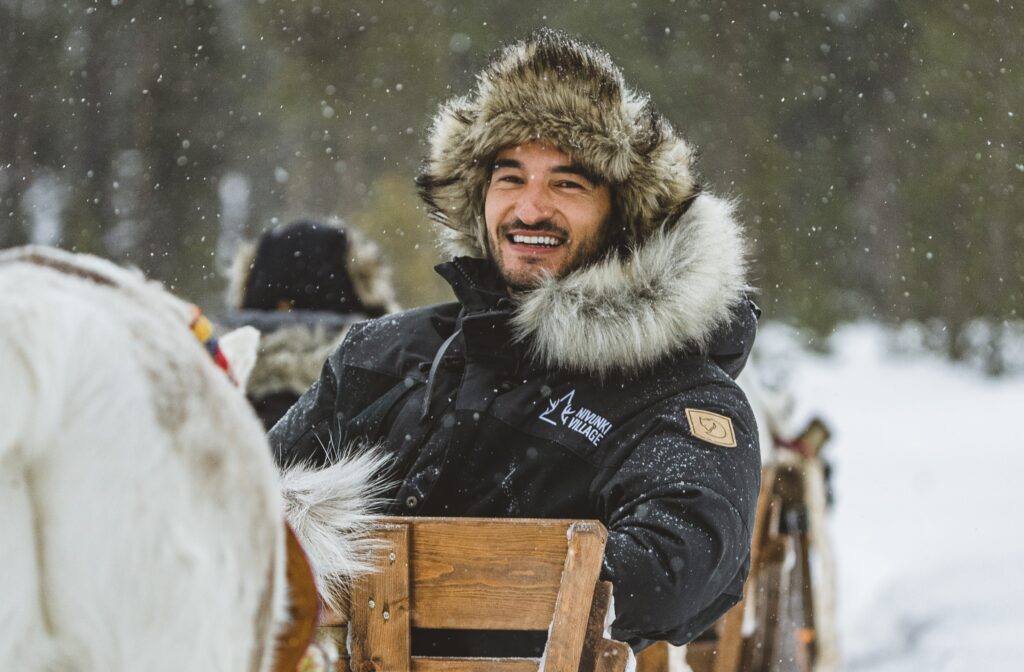
For your hands, a thin liner glove worn under a warm outer glove or mitten gives you flexibility: you can take the outer layer off briefly, for a photo or a zip, without exposing bare skin. Mittens are warmer than gloves because your fingers share heat. For your feet, wear wool socks inside insulated winter boots, and keep a spare pair of socks in your bag. At Nivunki Village, the boots, gloves and hat are part of the clothing package, so the liner gloves and wool socks are what you bring.
A neck gaiter or balaclava adds real protection on colder days and on snowmobile tours, where wind chill is a factor. On the coldest days, covering your cheeks and nose is not excessive; it is sensible.
What to wear each month from November to March
The winter season at Nivunki Village runs from 17 November 2026 to 31 March 2027, and each part of it has a distinct character.
November and December are the darkest part of the season. Kaamos, the polar night, settles in north of the Arctic Circle around midwinter, so much of your time outdoors is spent in twilight or darkness. What to wear in Lapland in December is decided by standing still as much as by the thermometer: you will spend evenings outside watching for the aurora rather than generating heat through movement. Full layering and warm hands, feet and head are the priority.
January is deep winter. According to the Finnish Meteorological Institute, the coldest day of winter in inland Finland usually falls at the end of January, and January is also when the temperature gap between southern and northern Finland is at its widest, around 12 degrees Celsius. Around Nivunki Village, cold snaps can reach minus 30 degrees. What to wear in Lapland in January is therefore the full system: all three layers, warm boots, mittens and a face covering on windy days. Our month-by-month guide to the Lapland winter covers each month in full.
February and March bring the light back, and by late March day and night are close to equal in length. Dressing for Lapland in February or March means layering for both extremes: sun reflected off snow can feel warm at midday, while evenings and early mornings remain cold. Be ready to open or remove a mid layer during active daytime pursuits, and keep the full system in place for evenings and aurora watches.
What to wear for each winter activity
The three-layer system applies to every activity, but the emphasis shifts depending on how much you are moving and how exposed you are to wind. The table below covers our winter activities at Nivunki Village.
| Activity | What matters most | Tip |
|---|---|---|
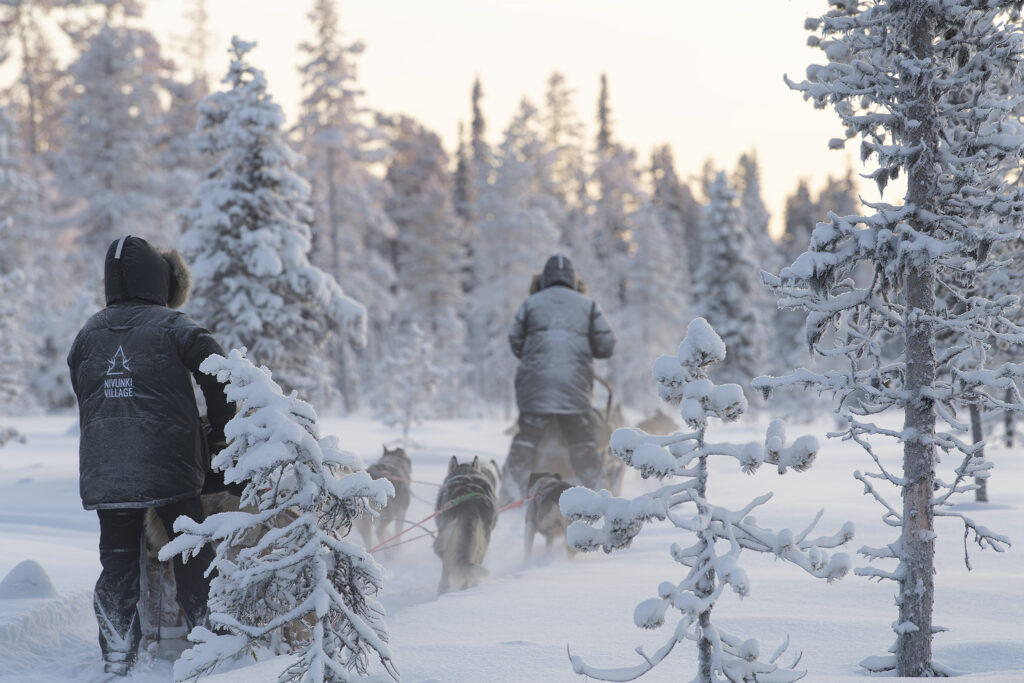
| Half Day Husky Adventure | Warmth in moving air over 18 km of dogsledding | Add an extra mid layer |
| Aurora Snowmobile Tour | Wind protection at speed | Cover your face and neck |
| Reindeer Ride in the Wilderness | Warmth at a calm, unhurried pace | Warm socks and liner gloves are the priority |
| Aurora Trek in Nivunki | Staying warm at the Aurora Laavu after the snowshoe walk | Wear your warmest layers |
| Scenic Snowshoe Trip to Fell Nivunki | Breathable layers while moving | Open layers before you overheat |
| Sauna evening | Easy layers to change in and out of | Ask our team about sauna practices |
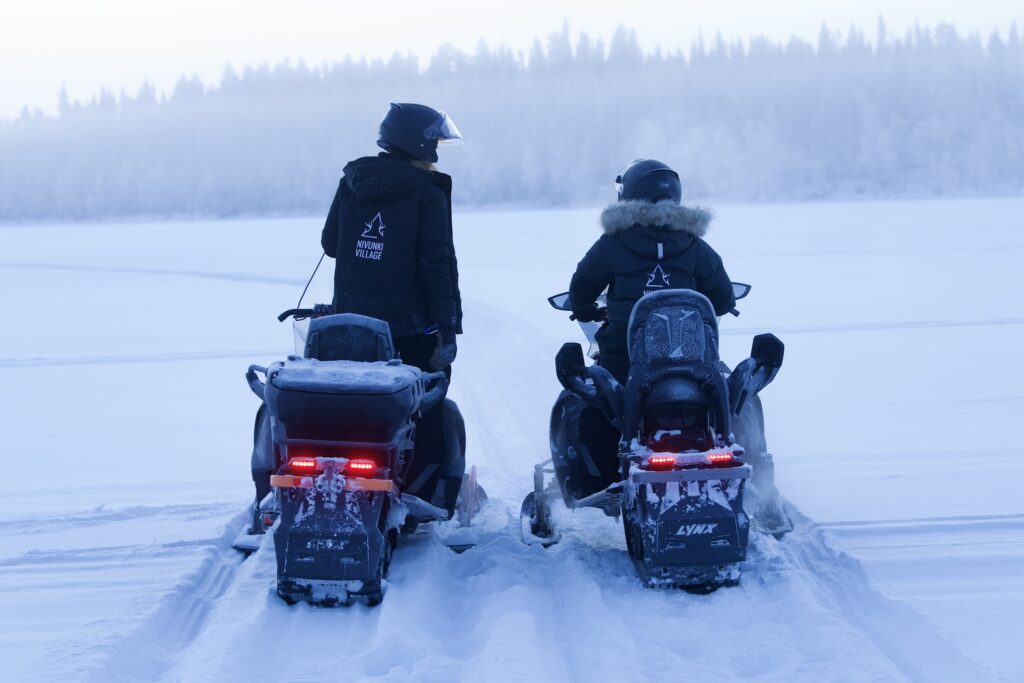
Your Lapland winter packing list
This packing list for Lapland in winter covers what you need to bring from home. It leaves out the jacket, trousers, boots, hat and gloves, which are part of the premium winter clothing included in your stay. Pack light and let us fill the gaps.
- Wool or synthetic base layers, top and bottom
- A fleece or wool mid layer, and a second one for the coldest days
- Wool socks, with a spare pair
- Thin liner gloves
- A neck gaiter or balaclava
- Swimwear or sauna wear if you prefer (ask our team)
- A small bag for your daytime layers
Frequently asked questions about dressing for Lapland
What should I wear in Lapland in December?
December in Finnish Lapland brings kaamos, when daylight north of the Arctic Circle is very limited and many activities take place in darkness or twilight. Dress in all three layers and pay close attention to your hands, feet and head. You will spend time standing still on aurora watches and evening activities, so warmth rather than breathability is the main concern.
What should I wear in Lapland in January?
January is deep winter, and the layering system is at its most important. Wear all three layers, with warm mittens, insulated boots and a face covering on colder days. You will generate some heat during active pursuits like snowshoeing, but on a husky sled or an aurora watch you cool down quickly. Err toward more insulation, not less.
What should I wear on a husky safari?
Dressing for a husky safari is mainly about warmth in moving air. On our Half Day Husky Adventure you cover 18 km by dog sled, so you are out in the airflow for long stretches without generating much heat of your own. An extra mid layer under your outer layer makes a real difference, and liner gloves under warm gloves or mittens keep your hands comfortable. Halfway through, there is a stop in a kota for salmon soup and hot drinks. Our guide to what to expect on a husky safari covers the rest.
What should women wear in Lapland?
The same three-layer principle applies to everyone. What to wear in Lapland for women is not a separate category: a moisture-wicking base layer, an insulating mid layer and a windproof outer layer, with warm boots, gloves and a hat. Fit matters more than gender-specific products. Choose base and mid layers that sit close to the body without restricting movement, and make sure your outer layer covers your wrists and neck fully.
Do I need to bring my own winter clothing to Nivunki Village?
Not the outer layer. Every stay at Nivunki Village includes a clothing package with a warm winter jacket and trousers, Sorel boots, hats and gloves, plus complimentary snowshoes. Bring your own thermal base layers, a good fleece, liner gloves and warm socks, and we take care of the rest. You can read more about what is included in a stay or ask our team before you travel.
Winter clothing included at Nivunki Village
One of the practical advantages of staying with us is that you do not need to buy or transport a full set of Arctic outerwear. Premium winter clothing is included in every stay, alongside complimentary snowshoes, breakfast and access to our lakeside sauna.
Our team works in these conditions every winter and is well placed to advise on what you will need for each activity and each type of day. If you are unsure what to bring, read our guide to what each winter month is like in Lapland or reach out directly. For arrival logistics, our guide to getting to Nivunki Village covers everything from Kittilä Airport to the village.
Get in touch at info@nivunkivillage.com or call +358 10 739 3220 and we will answer any questions you have before you travel.