Nivunki Village is our home in Muonio, Finnish Lapland. Welcoming guests here comes with a responsibility to care for the landscape, support the local community and preserve the history of this place.
That responsibility shapes how we build, heat our buildings, prepare your meals and work with local reindeer herders. It also shapes what we choose to leave alone: we have voluntarily protected the approximately 300 hectares of forest on our estate.
For us, sustainability is a continuing part of looking after Nivunki, expressed through practical choices and long-term care.
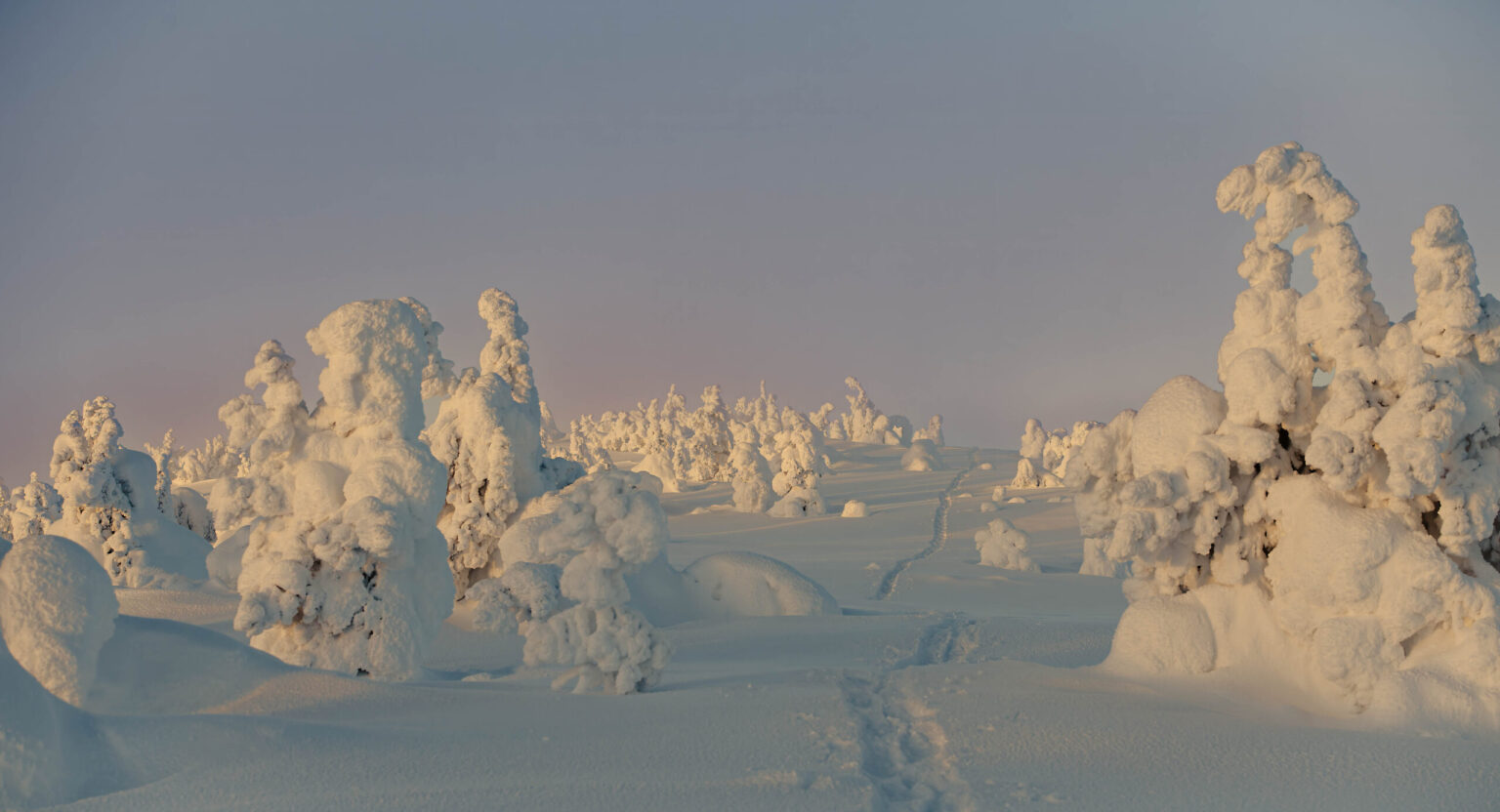
A forest we have chosen to protect
The forest surrounding Nivunki is more than a setting for your stay. It is home to wildlife, a source of seasonal ingredients and a place where the quiet and darkness of Lapland can still be experienced.
We have chosen to protect this approximately 300-hectare forest ourselves, keeping its future at the heart of how we care for the estate.
Around two hectares form the electrically lit resort area. The remaining land is kept free of permanent electric lighting, leaving space for nature and the Arctic night.
Caring for Nivunki Lake
Our care for Nivunki extends from the forest to the lake. We stock Nivunki Lake with whitefish, continuing our active involvement in the waters beside the village.
Together with voluntarily protecting our forest, restoring historic buildings and supporting local reindeer herders, this is part of our ambition to develop Nivunki as a regenerative resort: a place that contributes to the future of its surroundings and community.
Keeping the Arctic night dark
Darkness is part of the experience at Nivunki, and we make deliberate choices to preserve it.
All our outdoor lighting points downwards. During winter, we keep the lights at low output, and at 23:00 we switch them off to minimise light pollution.
These choices limit unnecessary artificial light in the surrounding landscape. For guests, they create an opportunity to experience the night through moonlight, stars and, when conditions are right, the Northern Lights.
You can help by switching off unnecessary lights in your hut when enjoying the sky.
Preserving six historic log buildings
Caring for Nivunki also means caring for the buildings that were here before us.
We have invested in protecting and renovating six historic log buildings. The work has included new roofs and replacing deteriorated logs at the base of the structures—substantial repairs intended to help these buildings stand for another century or two.
The historic setting is protected for its cultural significance under the Finnish Heritage Agency, Museovirasto. Work on details such as windows and doors has required craftspeople qualified in traditional restoration methods.
Preserving these buildings takes time, specialist knowledge and considerable investment. We believe their history deserves that care.
New buildings, traditional craftsmanship
Our restaurant and sauna are newly built, using traditional construction methods and whole logs. Local people built them, bringing local skills into the next chapter of Nivunki’s story.
The furniture was also made locally, by a carpenter working exclusively with natural materials.
These choices connect the newer parts of the village to the craftsmanship of its historic buildings. They also direct work and spending to people in our own region.
Food from the forests and waters around us
Our connection to the landscape continues in the kitchen.
During summer and autumn, Head Chef Markus and his wife Jessica, also a chef at Nivunki, spend time handpicking berries and mushrooms from Nivunki’s forests for the coming season.
When those ingredients reach your plate, they carry a connection to the place outside your window—and to the people who gathered and prepared them.
We buy food from as close to Nivunki as possible. Fish comes from local waters, and reindeer meat comes from the surrounding region. Availability and the seasons guide what we can source nearby.
For Markus and Jessica, cooking at Nivunki begins long before the winter’s first guests arrive.
Supporting local reindeer herding
Reindeer herding is a living tradition in Lapland. Keeping it alive means supporting the people who practise it.
During winter, we take in and feed around 120 reindeer belonging to the local reindeer-herding community in our enclosures. This arrangement provides practical and financial support to local herders, allowing the community to share in the benefits of tourism at Nivunki.
For us, this is part of being a good neighbour. We want tourism here to contribute to the continuation of local livelihoods and traditions.
Heating and water at Nivunki
Heating is an essential part of operating through a Lapland winter.
Our resort has seven geothermal wells, and the accommodation huts use air-source heat pumps. These systems form part of the practical infrastructure behind a warm and comfortable stay.
Our water comes from our own drilled wells, drawing groundwater from approximately 200 metres below the resort.
Looking after Nivunki includes caring for these systems and using the resources they provide thoughtfully.
Sorting waste as part of everyday work
We sort waste as part of the village’s daily operations.
It is a routine task, but one that belongs alongside the larger investments in buildings and heating. Responsible hospitality depends on everyday habits as well as decisions made when a place is built.
Please follow our team’s guidance on sorting waste during your stay.
Local people and the spirit of väärti
The people welcoming you are part of what makes Nivunki special. Our team brings together local roots, knowledge of the landscape and a personal connection to life in Lapland.
At the heart of our hospitality is the Lappish idea of väärti: a trusted relationship between host and guest.
We want you to feel that connection through the people you meet, the food you taste and the stories you take home.
How you can help during your stay
A few thoughtful choices help care for the place you have come to experience:
- Switch off unnecessary lights, especially when watching the night sky.
- Follow your guide’s advice on routes, wildlife and weather conditions.
- Give reindeer and other animals space, and follow handlers’ instructions.
- Bring everything you take into the forest back with you.
- Follow our guidance on sorting waste.
- Use water and heating thoughtfully.
- Respect the quiet and the people who call this region home.
Your questions about sustainability at Nivunki
Is the forest around Nivunki protected?
We have voluntarily protected the approximately 300 hectares of forest on our estate. This is our own commitment to caring for the forest surrounding Nivunki Village.
How does Nivunki reduce light pollution?
Our outdoor lights point downwards, operate at low output during winter and are switched off at 23:00. Around two hectares of the estate form the electrically lit resort area; the remaining land has no permanent electric lighting.
Does Nivunki use local ingredients?
Yes. We source food from as close as possible, including fish from local waters and reindeer meat from the region. Our chefs, Markus and Jessica, also handpick berries and mushrooms from Nivunki’s forests during summer and autumn for the coming season.
How does Nivunki support local reindeer herders?
We take in and feed around 120 of the local community’s reindeer during winter. This provides practical and financial support to herders and helps sustain a traditional livelihood in Lapland.
How are the buildings heated?
The resort has seven geothermal wells, and our accommodation huts use air-source heat pumps.
Are all the log buildings historic?
No. We have protected and renovated six historic log buildings. Our restaurant and sauna are new, built by local people using traditional methods and whole logs. A local carpenter made the furniture from natural materials.
Experience the place we care for
A stay at Nivunki is an invitation to enjoy the forest, the Arctic night and the warmth of local hospitality—and to discover the people and traditions that give this place its character.