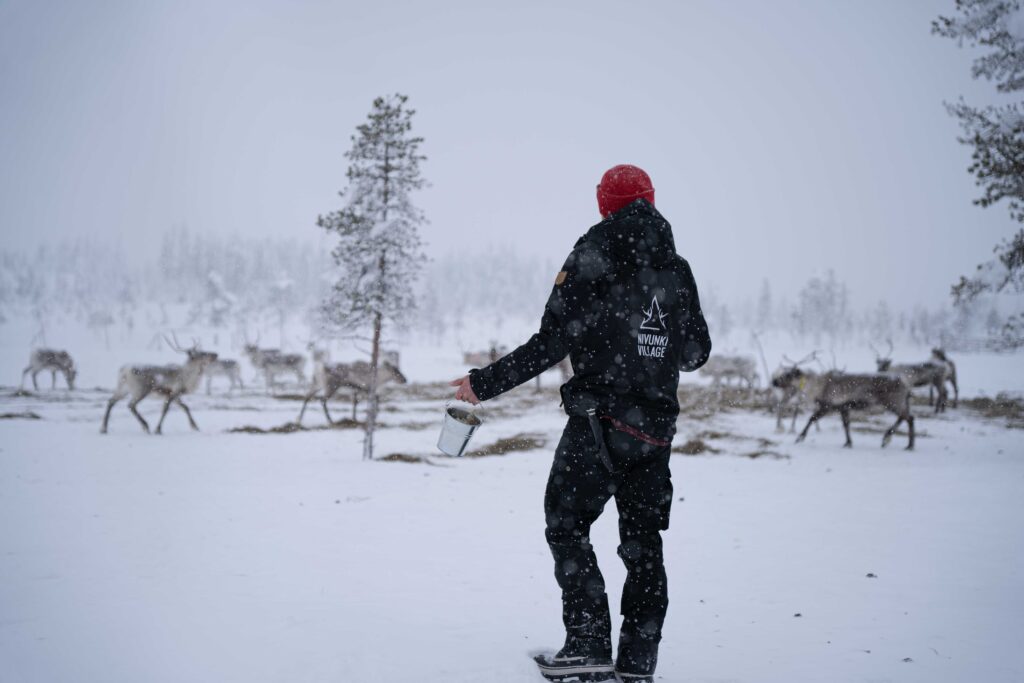
February is a strong month to visit Finnish Lapland. The days are lengthening after the deep midwinter dark, snow lies thick across the fells and frozen lakes, and February marks the start of one of the most active aurora periods of the year. At Nivunki Village, our adults-only retreat near Muonio, February 2027 is also when our ice fishing trips to Lake Särkijärvi begin. For anyone weighing up when to come, Lapland in February offers a particular kind of balance: real winter, returning light, and skies that are genuinely worth watching.
Is February a good time to visit Lapland?
Yes. February sits at the point where deep winter starts to ease without losing any of its character. The snow is still building toward its mid-March peak, temperatures are cold enough to keep every lake frozen and every trail in good condition, and the aurora season is entering one of its most active phases.
For couples and adults travelling without children, it is also a quieter month than the school-holiday weeks that cluster around Christmas and New Year. The landscape feels wilder, and the pace at a place like Nivunki Village reflects that. To understand what each winter month is like in Lapland, February stands out as the month that combines the full depth of winter with the first real sense of the light coming back.
The short answer to whether February is worth considering: it consistently ranks among the best months for aurora activity, winter activities, and snow conditions together.
The light returns
One of the defining qualities of Lapland in February is the change happening overhead every single day. After the polar night of December and the short, pale days of January, February brings a noticeable lengthening of daylight. According to lapland.fi, late winter delivers days of roughly half bright sun and half starry night, a rhythm that suits both daytime activity and evening aurora watching.
At Nivunki Village, that rhythm shapes the day naturally. Mornings open with pale Arctic light over the frozen lake. Afternoons are clear and cold, good for snowshoe hikes or a snowmobile run across the fells. By early evening, the sky darkens again and the conditions for aurora viewing return. The returning light does not diminish the night. It simply makes the contrast sharper.
For those curious about how the light continues to shift through the season, our guide to Lapland in March covers what changes in the following weeks.
Northern Lights in February
February is one of the best months of the year for the Northern Lights in Finnish Lapland. Both Visit Finland and the Finnish Meteorological Institute (FMI) name February to March, alongside September to October, as the most active aurora periods. The reason is geomagnetic: the angle of the Earth relative to the sun during the equinoxes and the weeks approaching them tends to produce stronger and more frequent aurora activity.
The FMI notes that the best window to watch for the Northern Lights is between 21.00 and 01.00 local time, when geomagnetic activity tends to peak. Finavia reports approximately 200 aurora nights a year across Lapland, which works out to roughly every second clear night. The single biggest variable is cloud cover. On a clear night, the odds are real. On an overcast one, patience is the only tool available.
At Nivunki Village, our location matters here. We sit beside a lake about 20 km from Muonio, away from the light pollution of resort centres. The glass kotas face the sky directly. Our guide to the best time to see the Northern Lights explains the conditions in more detail. For those who want to go out actively rather than wait, the Aurora Trek in Nivunki runs at 20.00 on Mondays, Wednesdays, Fridays and Sundays, and the Northern Lights Snowmobile Tour to Fell Särkitunturi departs at 19.30 on Tuesdays, Thursdays and Saturdays.
We never promise a sighting. But February, clear skies, and a location without light pollution give you a genuine chance.
Snow and weather in February
Lapland in February means proper winter. The FMI records snow depths peaking around mid-March, averaging 60 to 90 cm in eastern and northern Finland, and February is the month when that accumulation is still building. Trails are well-covered, lakes are solidly frozen, and the landscape holds the full white depth of the season.
The FMI also notes that in central Lapland, the gap between the coldest and warmest months’ mean temperatures is around 28 degrees Celsius, which gives a sense of how genuinely cold the winters are. At Nivunki Village, premium winter clothing is included with every stay, so guests arrive without needing to source specialist gear. Layers, covered skin and good boots are still essential, but the practical side of staying warm is taken care of.
Things to do in Lapland in February
February opens up one of the most varied activity windows of the winter season. Ice fishing in Lapland in February becomes available from this month, and at Nivunki Village, two dedicated trips begin in February and run through to April.
The Winter Fishing Trip to Lake Särkijärvi is a 2.5-hour experience, available on request. A short car journey brings you to the lake, where the trip involves checking fish traps and nets before returning for reindeer soup. The Arctic Adventure: Snowmobile Expedition and Ice Fishing extends the experience to five hours and 25 km: snowmobiling from the village to Lake Särkijärvi, fishing, and lunch outdoors. Both are available on request from February to April. You can find full details on our ice fishing trips page.
Beyond ice fishing, the full winter activity programme is running through February. The Half Day Husky Adventure covers 18 km over three hours, departing at 09.30 and 13.30 on Mondays, Tuesdays, Thursdays and Saturdays. Drivers must be at least 18. The Snowmobile Adventure to Old Mill Äkäsmylly is a five-hour, 50 km trip departing at 10.30 on Tuesdays, Thursdays and Saturdays, with the same age requirement for drivers. For a broader look at what is available, our guide to winter activities in Finnish Lapland covers the full range, and if snowmobiling is new to you, our guide for snowmobiling beginners is a good place to start.
Snowshoe hikes, the Lappish Ceremony, and the Art of Traditional Handicrafts are also available throughout the season. Breakfast, complimentary snowshoes and the public sauna are included with every stay, so the day can be as active or as still as you choose.
February at a glance
The table below summarises what to expect from Lapland in February 2027 at Nivunki Village.
| Topic | What to expect |
|---|---|
| Light | Days lengthening noticeably after midwinter, with a growing balance of daylight and dark |
| Aurora | Start of the February to March active period, one of the two peak windows of the year |
| Snow | Deep and still building toward the mid-March peak; trails and lakes in full winter condition |
| Ice fishing | Trips to Lake Särkijärvi available from February, running through to April |
| Activities | Full programme running: husky, snowmobile, snowshoe, aurora treks and cultural experiences |
| Clothing | Premium winter clothing included with every stay at Nivunki Village |
Frequently asked questions
Is February a good time to visit Lapland?
February is one of the strongest months of the winter season. Snow is deep, the aurora season is entering its most active phase, and the days are lengthening after midwinter. It is also a quieter month than the Christmas and New Year peaks. For adults looking for a genuine winter experience with good aurora prospects, February is a well-considered choice. You can explore how February compares with the rest of winter in our full seasonal guide.
Can you see the Northern Lights in Finland in February?
A trip to Finland in February for the Northern Lights is well timed. Both Visit Finland and the FMI identify February to March as one of the two most active aurora periods of the year. Northern Lights sightings in Finland in February depend primarily on clear skies. Finavia estimates around 200 aurora nights a year in Lapland, roughly every second clear night. A location away from light pollution, as at Nivunki Village, improves the conditions significantly.
Can you go ice fishing in Lapland in February?
Yes. Ice fishing in Lapland in February is available at Nivunki Village from the start of the month. The Winter Fishing Trip to Lake Särkijärvi is a 2.5-hour trip that includes checking fish traps and nets and finishing with reindeer soup. The Arctic Adventure: Snowmobile Expedition and Ice Fishing is a five-hour alternative that combines a 25 km snowmobile journey with fishing and an outdoor lunch. Both run on request through to April.
What is the weather like in Lapland in February?
Lapland in February is genuine Arctic winter. The FMI notes that snow depth in northern Finland is still building toward its mid-March average of 60 to 90 cm, and the seasonal temperature range in central Lapland spans around 28 degrees Celsius between the coldest and warmest months. Cold, clear days are common, and nights can be sharp. At Nivunki Village, premium winter clothing is included with every stay, which takes much of the practical uncertainty out of the cold.
February at Nivunki Village
Lapland in February brings together the best of what the winter season offers: deep snow, active aurora conditions, returning light and a full programme of activities on and off the ice. At Nivunki Village, our adults-only glass kotas sit beside a lake free from light pollution, and February is the month our ice fishing programme opens on Lake Särkijärvi. The season runs from 14 November 2026 to 3 April 2027.
If you are considering a stay and would like to know more about what February looks like in practice, whether that is timing an aurora trek, booking an ice fishing trip or choosing between activities, we are glad to help. Step inside a glass kota to see what the accommodation is like, or plan your February stay with our team and we will take it from there.