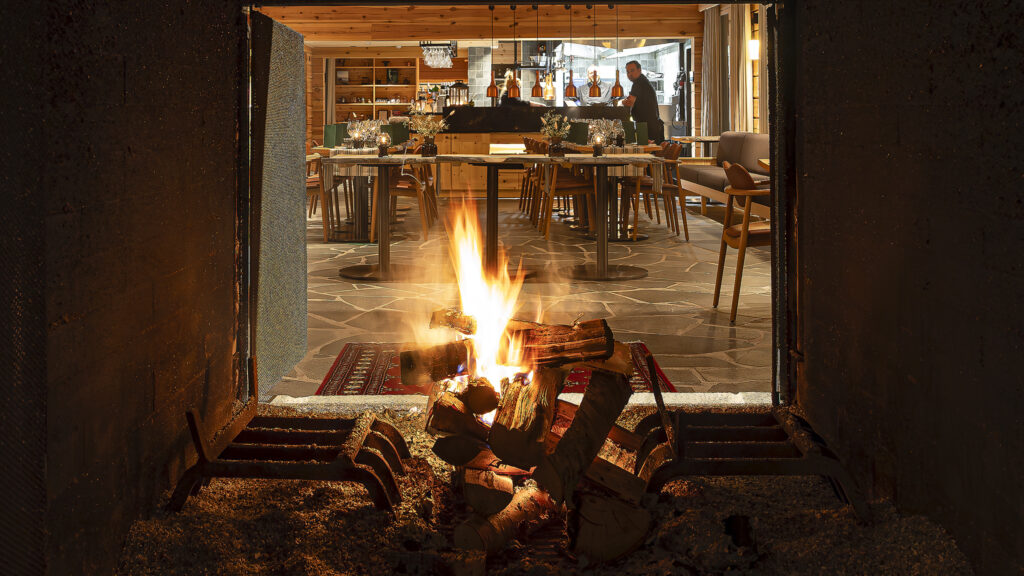
Lappish food is built on what the north provides: reindeer, moose and game birds, fish from cold lakes, forest berries, mushrooms and Lappish cheese. These ingredients have sustained people through long winters for centuries, and they remain the foundation of traditional Lapland cuisine today. At Nivunki Village, our restaurant cooks with these same ingredients under a simple guiding idea: “Think Global, Cook Local.”
Whether you are planning a romantic trip to Lapland or simply curious about what to eat in Lapland before you arrive, this guide covers ten Lappish foods worth knowing, from the most iconic dishes to the wild berries and warming drinks that shape the northern table.
1. Poronkäristys: sautéed reindeer with mashed potatoes
Poronkäristys is sautéed reindeer meat, thinly sliced and slow-cooked until tender, traditionally served with mashed potatoes and lingonberries. It is one of the most recognisable traditional Lappish dishes and a reliable answer to the question of what to eat in Lapland for the first time.
The dish is rooted in reindeer herding, a livelihood that has shaped life in Finnish Lapland for generations. The lingonberries cut through the richness of the meat with a clean, tart flavour that feels entirely of this landscape.
At Nivunki Village, reindeer meat appears across our menu in other forms, including reindeer tartare with lingonberry mayonnaise and reindeer fillet with celeriac purée and a potato and Lappish cheese croquette, both examples from our current à la carte menu. Poronkäristys itself reflects the kind of honest, ingredient-led cooking that defines Arctic food in Finland.
2. Smoked reindeer: a wilderness staple
Smoking is one of the oldest preservation methods in Finnish Lapland, and smoked reindeer has been a wilderness staple for as long as people have herded reindeer across these fells. The slow smoking process concentrates the flavour of the meat, producing something dense and deeply savoury.
Traditionally, smoked reindeer was carried on long journeys through the forest and eaten cold, often with rye bread. Today it appears in various forms across Lappish kitchens, from thin-sliced cold cuts to warm preparations with root vegetables.
Understanding reindeer herding in Lapland adds context to why smoked reindeer matters beyond the plate. At Nivunki Village, around 120 reindeer live in the reindeer enclosure on our land, and the connection between the animal, the landscape and the food is something guests can experience directly.
3. Lohikeitto: creamy Finnish salmon soup
Lohikeitto is a creamy salmon soup made with chunks of salmon, potato, leek and dill, finished with cream. It is one of the most comforting dishes in Finnish cooking, and its warmth makes it particularly well suited to cold northern evenings.
The soup is simple by design. Good salmon, a clean broth and fresh dill are what carry it. It is the kind of dish that rewards quality ingredients over complexity, which is why it appears so naturally in Lappish food culture where the ingredients themselves do the work.
Our restaurant at Nivunki Village works with fish from the Arctic landscape, and examples from our menu show a similar instinct for clean, ingredient-led fish cookery: steamed pike perch with cold-smoked salmon and creamy chanterelles, and butter-fried Arctic char with roasted Lappish potatoes and a sea buckthorn-white wine sauce.
4. Arctic char: Lapland’s prized river fish
Arctic char is a cold-water fish closely related to salmon and trout, and it thrives in the clear, cold lakes and rivers of Finnish Lapland. Its flesh is firm and flavourful, with a delicate richness that makes it one of the most prized catches in the north.
The fish has been part of Lappish food culture for centuries, caught through ice in winter and from riverbanks in summer. It suits a range of preparations, from simple butter-frying to more refined treatments with northern sauces and root vegetables.
At Nivunki Village, butter-fried Arctic char with roasted Lappish potatoes and a sea buckthorn-white wine sauce is an example from our current menu. The sea buckthorn brings a bright acidity that works well against the richness of the fish, a pairing that feels native to this part of Finland.
5. Leipäjuusto: squeaky cheese with cloudberry jam
Leipäjuusto, sometimes called Finnish squeaky cheese or bread cheese, is a traditional baked cheese with a mild, milky flavour and a firm texture that produces a distinctive squeak when chewed. It is one of the most distinctive traditional Lappish foods and a staple of the northern table.
The cheese is traditionally made from cow’s milk and baked or grilled until the surface develops a golden crust. It is most often served warm, paired with cloudberry jam, a combination that balances the mild saltiness of the cheese with the tart sweetness of the berry.
At Nivunki Village, our dessert menu includes a Finnish cheese selection with homemade jams, which reflects exactly this tradition. It is a quiet, honest way to end a meal that draws on what the north has always offered.
6. Cloudberries: Lapland’s golden Arctic berry
Cloudberries in Lapland grow wild across the boggy fell landscape, ripening briefly in late summer into small golden fruits with a tart, complex flavour unlike any cultivated berry. They are considered one of the most prized wild ingredients in Finnish Lapland, and foraging for them is a seasonal ritual for many locals.
The berry’s short season and the difficulty of harvesting it in quantity make it genuinely precious. It appears in jams, sauces, desserts and liqueurs across Finnish Lapland, and its flavour carries the acidity of the north alongside a floral, almost tropical note.
At Nivunki Village, cloudberries appear on our dessert menu as homemade cloudberry sorbet, an example from our current à la carte menu. For those seeking Arctic dining for two, finishing a meal with cloudberry sorbet is a small and specific pleasure that belongs to this landscape.
7. Rieska: traditional Lapland flatbread
Rieska is a soft, unleavened flatbread traditional to northern Finland, made quickly from barley or potato flour and baked at high heat. It is one of the oldest breads in the Finnish north, and its simplicity reflects the practical cooking of a landscape where ingredients were limited and time was not wasted.
The bread is best eaten fresh and warm, spread with butter. It is a natural companion to smoked fish, cheese or reindeer, and it appears on tables across Finnish Lapland as an everyday staple rather than a special occasion food.
Rieska represents the kind of traditional Lappish food that needs no embellishment. Its value is in its directness: a few ingredients, honest baking and something that tastes entirely of where it comes from.
8. Sautéed vendace: a northern lake delicacy
Vendace is a small freshwater fish found in the cold lakes of northern Finland, and sautéed vendace, often prepared with butter and served with mashed potatoes and pickled cucumber, is a classic of Finnish lake cuisine. Its delicate flavour and crisp skin when pan-fried make it a favourite among those who know it.
The fish is closely tied to the lake landscape of Finnish Lapland, and eating it connects visitors to the same waters that have fed communities in this region for generations. It is modest in size but generous in flavour, and it rewards simple preparation.
At Nivunki Village, our restaurant works with fish from the Arctic landscape, and bilberry-cured whitefish with dill cream and rye bread is another example from our menu that reflects the same instinct: northern lake fish, treated with care and local ingredients.
9. Reindeer tongue and offal dishes
Reindeer tongue and offal dishes represent the older, more complete tradition of reindeer use in Finnish Lapland, where nothing from the animal was wasted. Tongue, liver and blood-based preparations have been part of Lappish food culture for centuries, cooked in ways that reflect genuine respect for the animal.
These dishes are less common on contemporary restaurant menus but remain part of the living food heritage of the region. For travellers curious about traditional Lappish food beyond the familiar cuts, they offer a more complete picture of how reindeer herding communities have eaten and lived.
Head Chef Markus Friman, who was born and raised in Äkäslompolo, brings exactly this kind of deep local knowledge to our restaurant at Nivunki Village. The “Think Global, Cook Local” philosophy means that seasonal and traditional ingredients shape what appears on the menu, guided by what the Arctic landscape provides.
10. Glögi and hot berry drinks: warming Lapland beverages
Glögi is a spiced warm drink, similar to mulled wine, made with red wine or juice and flavoured with cinnamon, cloves and cardamom. It is a fixture of Finnish winter, served from early December onward and closely associated with the cold months when warmth becomes something you seek deliberately.
Alongside glögi, hot berry drinks made from lingonberry, bilberry or sea buckthorn juice are common across Finnish Lapland. They are tart, warming and deeply northern in character, made from berries that grow wild across the same landscape where you are standing when you drink them.
These drinks are part of what makes the experience of Lappish food so tied to season and place. At Nivunki Village, the winter season runs from 14 November 2026 to 3 April 2027, and a warm drink after a snowshoe trek or a return from the sauna is one of those small, specific pleasures that belong to this time of year.
Lappish food at a glance
The ten foods above cover the range of traditional Lapland cuisine, from the most iconic dishes to the wild ingredients that define the northern table. Here is a quick reference to what each one is and how it appears at Nivunki Village.
| Food | What it is | On our menu |
|---|---|---|
| Poronkäristys | Sautéed reindeer with mashed potatoes and lingonberries | Reindeer appears as tartare with lingonberry mayonnaise and as fillet with celeriac purée |
| Smoked reindeer | Slow-smoked reindeer meat, a traditional wilderness staple | Reindeer meat is a core ingredient across our seasonal menu |
| Lohikeitto | Creamy Finnish salmon soup with potato, leek and dill | Cold-smoked salmon appears in our steamed pike perch dish |
| Arctic char | Cold-water lake fish with firm, flavourful flesh | Butter-fried Arctic char with roasted Lappish potatoes and sea buckthorn-white wine sauce |
| Leipäjuusto | Traditional Finnish baked cheese, served with cloudberry jam | Finnish cheese selection with homemade jams on our dessert menu |
| Cloudberries | Wild Arctic berry with a tart, complex flavour | Homemade cloudberry sorbet on our dessert menu |
| Rieska | Soft unleavened flatbread made from barley or potato flour | Rye bread features in our bilberry-cured whitefish dish |
| Sautéed vendace | Small freshwater lake fish, pan-fried and served simply | Bilberry-cured whitefish with dill cream and rye bread reflects the same northern lake tradition |
| Reindeer offal | Traditional preparations using tongue, liver and other cuts | Our seasonal menu is shaped by local heritage and what the Arctic provides |
| Glögi and hot berry drinks | Spiced warm drinks and hot berry juices from northern berries | Wild berries including lingonberry, bilberry and sea buckthorn feature across our menu |
Frequently asked questions
What is traditional Lappish food?
Traditional Lappish food is built on the ingredients the northern landscape provides: reindeer meat from reindeer herding, fish from cold lakes and rivers, wild berries such as cloudberries, lingonberries and bilberries, and foraged mushrooms. The cooking is honest and ingredient-led, shaped by long winters and a practical relationship with the land.
What is poronkäristys?
Poronkäristys is a traditional Finnish dish of thinly sliced reindeer meat, sautéed slowly until tender and served with mashed potatoes and lingonberries. It is one of the most recognised dishes in Finnish Lapland and a good introduction to reindeer meat in Lapland for first-time visitors to the north.
Is reindeer meat common in Lapland?
Yes. Reindeer meat is central to Lappish food culture and appears across menus throughout Finnish Lapland. It comes from reindeer herding, which remains a traditional livelihood in the region. The meat is lean, flavourful and suited to a range of preparations, from slow-sautéed dishes to tartare and cured cuts.
Can visitors eat at the Nivunki Village restaurant without staying overnight?
Yes, non-overnight guests are welcome at our restaurant, but a reservation in advance is required. You can reach us at restaurant@nivunkivillage.com or by calling +358 40 714 0022. Guests staying at Nivunki Village have breakfast included in every stay. See our menu for current seasonal dishes.
Dining at Nivunki Village
Our restaurant works with a simple idea: cook with what the Arctic gives. Head Chef Markus Friman, who was born and raised in Äkäslompolo, leads a kitchen that draws on locally sourced game, fish, berries and mushrooms. The menu changes with the season, and every dish reflects the landscape outside the window.
Nivunki Village is an adults-only retreat beside a lake, about 20 km from Muonio, open from 14 November 2026 to 3 April 2027. Whether you are staying in one of our glass kotas or visiting for an evening, the table is part of what makes the experience whole. If you are curious about unique places to stay in Lapland alongside the food, or want to understand why guests choose Nivunki Village, both are worth a read before you plan your visit.
To make a restaurant reservation or ask about our current menu, contact us at restaurant@nivunkivillage.com or call +358 40 714 0022. To arrange a stay, plan your stay with our team and we will take care of the rest.