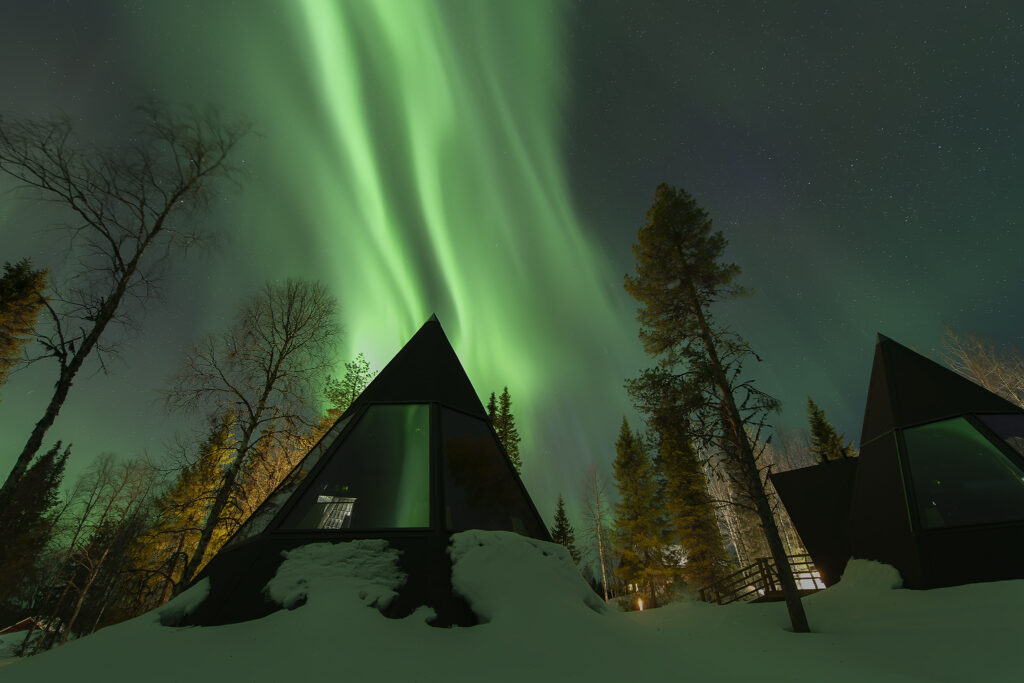
Both are glass-roofed rooms designed to let you watch the sky from bed, but they take their names and shapes from different traditions. A glass igloo is named after the dome-shaped snow shelter, while a glass kota draws its form from the kota, the traditional cone-shaped hut of Lapland. At Nivunki Village, near Muonio in Finnish Lapland, we chose the kota. Below, we answer the questions travellers ask most often when comparing these two accommodation types.
What is the difference between a glass kota and a glass igloo?
The core difference is shape and cultural origin. A glass kota follows the silhouette of the kota, the traditional cone-shaped hut of Lapland, while a glass igloo takes its name from the dome-shaped snow shelter associated with Arctic peoples further north and west. Both use glass to frame the sky above the bed, but the architectural reference points are distinct. In travel listings, “glass igloo Finland” and “glass igloo Lapland” are used loosely to describe almost any glass-roofed room, which can make the terms confusing. A glass kota is a more specific term, tied to a particular Lappish form.
At Nivunki Village, our glass kotas were designed specifically for the village, with the shape of the traditional kota as their starting point. The result is a room that feels rooted in the landscape around it, not borrowed from somewhere else. Facilities, size, and comfort levels vary considerably from property to property across Finnish Lapland, so it is worth looking carefully at what each room actually includes before you book.
What is a kota in Lapland?
A kota is a traditional cone-shaped hut used in Lapland for shelter, gathering, and cooking over an open fire. It is one of the defining structures of Lappish culture, recognisable by its steeply angled sides that rise to a central point. The word “kota” refers specifically to this Lappish form. If you are asking what a kota is in Lapland, the short answer is: a conical wooden or fabric shelter that has been central to life in the region for centuries.
The glass kota takes that conical silhouette and reinterprets it in a contemporary way. The angled walls incorporate glass panels that open the room to the sky, preserving the shape while replacing solid materials with transparency. At Nivunki Village, our glass kotas were inspired by this tradition. The unique accommodation in Finnish Lapland we offer is rooted in the same landscape that shaped the original kota form. The farm at Nivunki has been part of this land since the 1800s, which is why the kota felt like the right reference point for the design.
What is a glass igloo?
A glass igloo is a glass-roofed or glass-walled room, typically dome-shaped, designed for sleeping under the night sky in cold climates. The name comes from the igloo, the dome-shaped snow shelter traditionally built by Arctic peoples, though a glass igloo is a modern hospitality product with no structural connection to that original form. In travel marketing, “glass igloo Finland” and “glass igloo Lapland” have become shorthand for any transparent-roofed accommodation in the region, regardless of the room’s actual shape.
Because the term is used so broadly, glass igloo listings in Finland can cover a wide range of products: some are true domes, others are more angular, and facilities vary from property to property. The name tells you about the experience on offer, watching the sky from bed in a cold-climate setting, but it does not tell you much about size, comfort, or what is included in the stay.
Glass kota vs glass igloo compared
The table below sets out the main differences when comparing glass igloos and glass kotas. Facilities listed for Nivunki Village are verified; for other properties, they vary.
| Feature | Glass kota | Glass igloo |
|---|---|---|
| Shape | Traditional cone-shaped kota form | Usually a dome or similar rounded shape |
| Roots | The traditional hut of Lapland | Named after the snow shelter |
| Sky view | Glass opens the room to the sky | Glass roof or walls |
| Facilities | Vary by property; at Nivunki Village, 30 m² with private bathroom and rain shower | Vary by property |
| Best for | Sky views in a form rooted in Lappish tradition | Sky views from bed |
Can you see the Northern Lights from a glass kota or glass igloo?
Yes, you can see the Northern Lights from either type of room, provided the sky is clear, the location is dark, and the aurora is active. Northern Lights experiences in glass igloos in Lapland depend on the same conditions as any aurora sighting: no cloud cover, minimal light pollution, and sufficient solar activity. The room itself creates the right conditions for watching, but it cannot influence the sky.
Location matters more than the room type. A glass kota or glass igloo close to a resort town with significant artificial lighting will offer a different experience from one set beside a dark lake in open countryside. Nivunki Village sits about 20 km from Muonio, beside Lake Nivunkijärvi, with no nearby light sources to wash out the sky. That matters on a clear night.
According to Finavia, Finnish Lapland sees around 200 nights a year when auroras are visible, which works out to roughly every second clear night. Clear skies are the single biggest variable. No property can guarantee a sighting, and any that does is overstating the case. What a well-positioned glass kota or igloo can do is put you in the right place, facing the right direction, so that when the sky does cooperate, you are ready. For more on timing and conditions, our guide to seeing the Northern Lights in Finnish Lapland covers what to expect across the season.
Is a glass igloo or glass kota worth it?
For most travellers, yes, but the honest answer depends on how you book. A glass igloo or glass kota is worth it when you stay for several nights at a dark, remote location, giving yourself more chances of a clear sky. A single night at a property near a lit resort centre is a less reliable way to see the aurora, and the premium cost of a glass room is harder to justify on that basis.
The experience is about more than aurora sightings. Waking to a frozen lake, watching the sky shift through the night, and sleeping in a room that feels genuinely connected to the landscape around it have their own value. The question of whether a glass igloo stay in Finland is worth it is also a question of what the stay includes. Breakfast, winter clothing, sauna access, and transfer arrangements all affect the overall value. Check carefully what each property bundles into the room rate and what sits on top as an extra.
If you are planning a romantic, adults-only trip to Finnish Lapland, a glass kota or igloo is one of the more considered ways to do it, provided the setting genuinely delivers on privacy and darkness.
What to check before you book a glass kota or igloo
Before committing to any glass kota or glass igloo booking in Lapland, run through these six points:
- Distance from resort lighting and other sources of light pollution
- Room size and whether it fits your travel party comfortably
- Private bathroom, and whether it is en suite or shared
- What is included in the rate: breakfast, clothing, sauna, transfers
- Whether the property is adults-only or welcomes families
- Transfer time from the nearest airport or rail connection
For other special places to stay in Lapland, these same criteria apply. The answers vary significantly between properties, so it is worth reading the detail rather than relying on the room name alone.
Frequently asked questions
What is a kota in Lapland?
A kota is the traditional cone-shaped hut of Lapland, historically used for shelter, gathering, and cooking over an open fire. Its steeply angled sides rise to a central point, giving it a silhouette distinct from the dome-shaped igloo. The glass kota takes this conical form and reinterprets it with glass panels that open the room to the sky above.
Is a glass igloo worth it?
A glass igloo is worth it when you stay for several nights at a location with genuine darkness and no nearby light pollution. One night near a busy resort reduces your chances of a meaningful aurora experience. Factor in what the rate includes, room size, bathroom facilities, and the distance from the nearest airport before deciding if the experience matches the investment.
Can you see the Northern Lights from a glass igloo in Lapland?
Yes, when the sky is clear and the location is dark. Northern Lights sightings from glass igloos in Lapland depend on cloud cover, solar activity, and how far the property sits from artificial lighting. Finnish Lapland averages around 200 aurora-visible nights per year according to Finavia, roughly every second clear night. No property can guarantee a sighting, and clear skies remain the deciding factor.
Do glass kotas have private bathrooms?
It depends on the property. Facilities vary from one glass kota to another across Finnish Lapland. At Nivunki Village, each glass kota has a private bathroom with a rain shower and bathrobes included. Always check the specific room description before booking, as some properties in the region offer shared facilities rather than en suite bathrooms.
Is a glass kota warm enough in winter?
At Nivunki Village, each glass kota is a fully equipped room with a king-size bed, a private bathroom with a rain shower, a minibar, a Nespresso machine, and all the amenities you would expect from a well-appointed room. The kotas are designed for winter use in Finnish Lapland. Beyond that, heating system specifics vary by property and are best confirmed directly with the accommodation before arrival.
The glass kotas at Nivunki Village
Our glass kotas are 30 m² rooms designed for one or two guests, with a king-size bed as standard and twin beds available on request. Each kota has a private bathroom with a rain shower, bathrobes, a minibar, a Nespresso machine and a tea kettle, free wi-fi, and a TV. Check-in is at 15.00 and check-out at 11.00.
Every stay includes breakfast, premium winter clothing, complimentary snowshoes, and access to the public sauna with panoramic windows. The village sits beside Lake Nivunkijärvi, about 20 km from Muonio, with no light pollution to interrupt the view. It is an adults-only setting, built on the site of a wilderness farm founded in the 1800s, and the team who look after you grew up in this part of Finnish Lapland.
For a closer look at what a glass kota is like inside, or to find out about unique accommodation in Finnish Lapland more broadly, the links above are a good starting point. When you are ready to plan your stay, check availability with our team and we will take it from there.